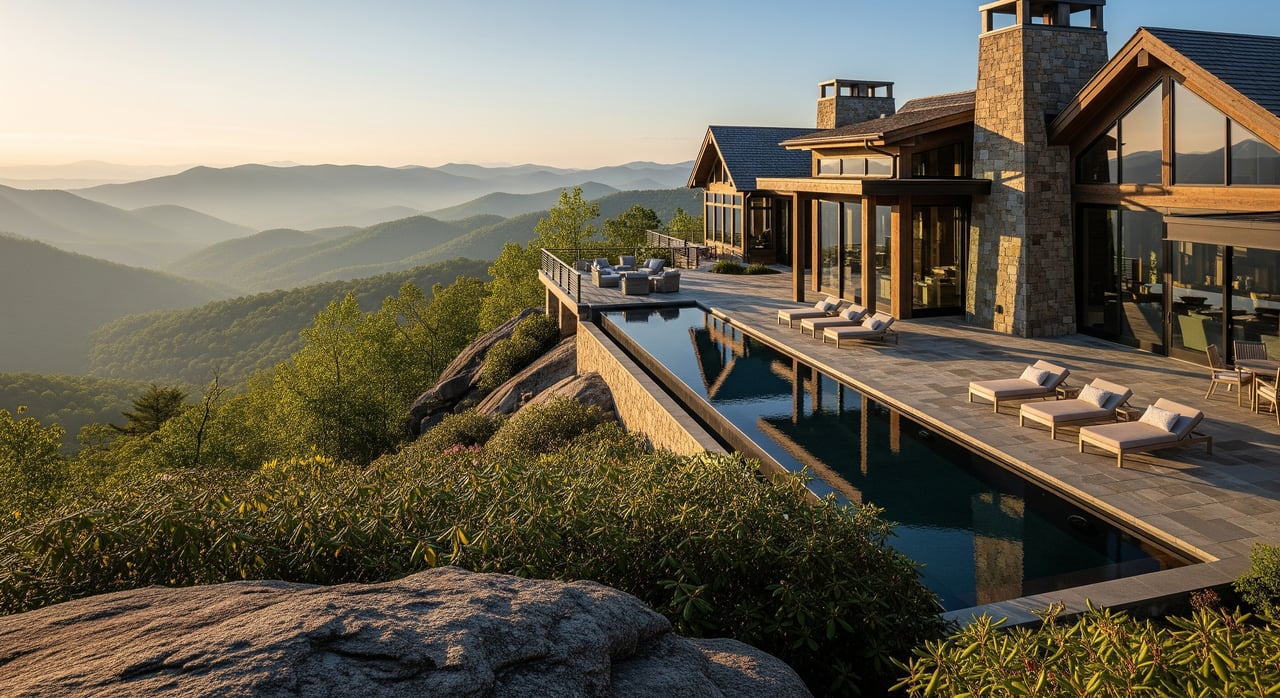
A few hundred feet can change your day in the mountains. If you are comparing homes in Cashiers and Highlands, elevation affects everything from morning frost to whether your driveway is passable after a snow. You want views, comfort, and easy access without surprises. This guide shows you how elevation shapes weather, roads, utilities, risks, and costs so you can buy with confidence. Let’s dive in.
Elevation basics you should know
Highlands generally sits higher than much of the Cashiers plateau. That extra height can mean cooler temperatures, more snow, and different growing conditions than nearby valleys.
- Rule of thumb: you lose about 3.5°F for every 1,000 feet of elevation gain. Even a 500‑foot difference can feel 1 to 2 degrees cooler on average.
- Ridgelines often feel windier and can warm fast in sun, then cool quickly at night. Valley bottoms can trap cold air, which increases overnight frost compared with nearby slopes.
- Orographic lift means higher sites tend to get more rain and snow. Snow may also linger longer on shaded, high-elevation roads and driveways.
Cashiers vs. Highlands overview
You will notice more frequent winter weather at higher elevations around Highlands compared with many parts of Cashiers. On the plateau, microclimates shift fast over short distances, so two properties a mile apart can have very different conditions.
- In town centers, you may find municipal or community water, but service drops off quickly outside town. Many properties in both areas rely on private roads, wells, and septic.
- Higher, more exposed neighborhoods often see more wind and snow. Lower valley areas may have easier year-round access but can be colder overnight due to cold-air pooling.
Weather and growing season
Elevation shapes your day-to-day comfort and your landscape plan.
- Temperature and frost: Higher elevation means cooler days and nights. Valleys can be colder at daybreak because cold air sinks. Expect more frost in low pockets and longer shoulder seasons higher up.
- Snow and rain: Higher parcels usually receive more precipitation and hold snow longer. Plan for winter driving challenges if your home sits high or faces north.
- Growing season: The frost-free window shortens as you go up. South-facing slopes warm earlier and can lengthen the growing season compared with north-facing slopes at the same elevation. Choose plantings accordingly and rely on local nursery or extension guidance.
Roads and winter access
Access depends on who maintains the road and how steep the approach is.
- Maintenance responsibility: North Carolina DOT maintains state roads. Counties, HOAs, or owners maintain many subdivision and private roads. Private mountain roads may not be plowed quickly during storms.
- Winter priority: State and county crews focus on main routes first. Steep private drives or secondary subdivision roads can stay icy several days after a storm.
- What to ask: Find out whether chains or 4WD are commonly needed. Ask about typical winter closures, steep curves, and shaded stretches that hold ice.
Driveways and site work
Driveway design can be a major cost driver in the mountains.
- Grade guidelines: Many contractors target sustained grades under about 10 to 15 percent. Steeper drives can require switchbacks, retaining walls, special surfaces, or engineered drainage.
- Drainage and erosion: Mountain soils and slopes need proper ditches, culverts, and stable outlets. Poor drainage can damage surfaces and cause slope instability.
- Rock and excavation: Bedrock is common. Long drives may require blasting or heavy excavation. Get estimates before you commit.
- Permitting: Jackson and Macon counties typically require driveway permits and have grade and sight-distance standards. Confirm rules and inspections early.
Water, septic, and utilities
Many homes outside town centers rely on wells and septic systems. These are reliable when designed and maintained correctly, but they require careful due diligence.
- Septic: Steep slopes, shallow soils, or rock can limit standard systems and may require engineered options. Ask for the septic permit, soil evaluation, and system as-built. Get maintenance records or a recent inspection.
- Wells: Drilled wells can vary in depth and yield due to local geology. Request the well log, recent water-quality tests, and consider a pump test if results are old.
- Municipal water: Available in town centers and select communities only. Confirm availability, tap fees, and any extension costs.
- Power and heat: In rural areas, power lines are often overhead and more vulnerable to ice and wind. Many owners keep propane, oil, or wood as backup heat. Confirm winter delivery routes.
- Internet and cell: Coverage can change house-to-house. Fixed wireless, DSL, cable, or fiber may be available near town; satellite options are a practical backup in remote areas. Test on site.
Environmental risks and insurance
Slope, vegetation, and water features influence both safety and insurability.
- Erosion and slope stability: Steep cuts and long drives need engineered drainage and revegetation. Retaining walls are common on developed slopes.
- Wildfire: Forested sites carry seasonal wildfire risk. Defensible space and fire-wise landscaping can reduce exposure and may help with insurance.
- Flooding: Valley lots near streams can sit in mapped flood zones. Ridgelines are typically outside floodplains but can face runoff and erosion issues.
- Insurance: Higher snow loads, difficult access, and wildfire exposure can affect premiums and coverage. Get quotes early, including any access-related restrictions.
Which elevation fits your priorities?
Every buyer balances comfort, cost, access, and views differently. Think about how you plan to use the home and during which months.
Ridgeline and high elevation
- Pros: Big views, less cold-air pooling, dramatic scenery, privacy.
- Cons: Cooler averages, more snow and wind, higher driveway and site-work costs, possible utility limitations, shorter growing season.
Valley and lower elevation
- Pros: Easier year-round access, milder microclimate, longer growing season, often closer to town services.
- Cons: More overnight frost pockets, potential flood risk near streams, views may be limited by terrain and trees.
Due diligence checklist
Use this list to get answers before you fall in love with a view.
- Elevation and relief
- Verify the parcel’s elevation and the difference between the house site and access road.
- Road and access
- Identify who maintains the road and how maintenance is funded. Ask about typical winter conditions and whether 4WD or chains are common.
- Driveway feasibility
- Commission a topographic survey and driveway plan for new builds. Ask contractors about excavation, blasting, surface options, and drainage solutions.
- Septic and well
- Obtain the septic permit and as-built. Get a recent inspection. Request the well log, recent water tests, and consider a pump test.
- Utilities and communications
- Confirm electric service type, outage history, and heating fuel options. Verify internet options and cell coverage with on-site testing.
- Environmental and hazard maps
- Check FEMA flood designations, county landslide or slope-susceptibility resources, and wildfire guidance.
- Zoning and covenants
- Confirm setbacks, buildable area, tree-removal rules, and any HOA responsibilities for road or snow maintenance.
- Insurance
- Get quotes that reflect elevation, access, wildfire exposure, and winter weather.
- Cost planning
- Budget for driveway work and maintenance, potential septic upgrades, well repairs, and seasonal snow removal if needed.
- Lifestyle fit
- Check emergency response times, proximity to medical care and groceries, and whether you can access the home comfortably in the months you plan to visit.
Local questions to ask during showings
- How quickly does the subdivision road get plowed and treated after snow or ice?
- Do residents commonly use 4WD or chains in winter, and for how many days per season?
- Are there shaded curves or steep pitches on the approach that hold ice?
- What is the typical propane or heating-fuel delivery schedule in January and February?
- Are the power lines overhead or underground, and what is the recent outage history?
- Is there a current septic permit and system as-built, and when was it last inspected?
- Do you have recent well logs and water-quality results?
- What internet services are available today, and what do neighbors use?
Work with a local guide
Buying in the Cashiers–Highlands plateau is about matching your lifestyle with the right elevation, access, and utilities. A few careful questions can protect your comfort and your budget for years to come. If you want a clear look at the trade-offs for a specific road, ridge, or valley, we are ready to help you evaluate the facts and move forward with confidence.
Have questions about a particular property or want a customized elevation and access review before you make an offer? Reach out to the local team at NC Mountain Real Estate to Schedule a Tour.
FAQs
Will a higher home in Cashiers or Highlands feel colder year-round?
- Yes. As a rule of thumb, expect about 3.5°F cooler temperatures for every 1,000 feet of elevation gain.
Do higher-elevation homes near Highlands get more snow than town centers?
- Often yes. Higher and more exposed sites typically see more frequent accumulation and slower melt times.
Is a valley home in the Cashiers area warmer at night than a ridge home?
- Not always. Valley bottoms can trap cold air, which can make overnight lows colder than nearby slopes or ridges.
What driveway grade is practical for mountain homes here?
- Sustained grades under about 10 to 15 percent are commonly recommended; steeper drives often need engineered solutions.
Who maintains roads in Cashiers and Highlands neighborhoods?
- State roads are maintained by NCDOT, while many subdivision and private roads are maintained by HOAs or owners.
Can I plant a garden at higher elevations on the plateau?
- Yes, but the growing season is shorter. Choose cold-tolerant varieties and favor south-facing, sun-exposed spots.
Will insurance cost more for a remote, high-elevation property?
- It can. Snow loads, access challenges, and wildfire risk may affect premiums, so get quotes early in due diligence.